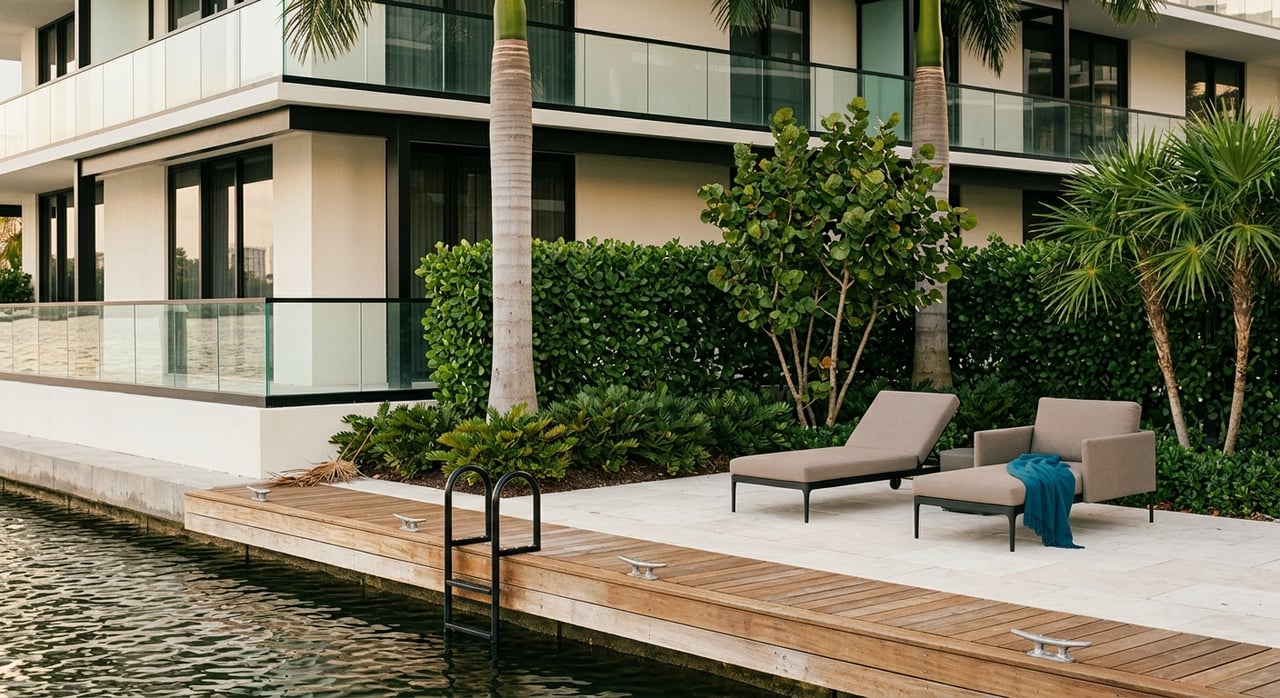
If you are shopping for a waterfront condo in Aventura, one detail can change your whole search: most “waterfront” here is not oceanfront. In Aventura, you are usually comparing Intracoastal, bay, canal, or marina-oriented buildings, and that difference affects views, pricing, fees, insurance questions, and long-term resale. If you want to buy with confidence, you need more than a pretty balcony view. Let’s dive in.
What waterfront means in Aventura
Aventura is a 3.2-square-mile city in northeast Miami-Dade, and its eastern edge runs along the Intracoastal Waterway. It sits about 1 mile west of the Atlantic Ocean, which is why Aventura’s waterfront condo market is usually defined by waterway, bay, canal, and marina exposure rather than true oceanfront product.
That matters when you compare Aventura to nearby coastal markets. Miami Beach is a barrier-island community between Biscayne Bay and the Atlantic Ocean, while Sunny Isles Beach sits between the Intracoastal Waterway and the Atlantic Ocean. If your goal is direct oceanfront, Aventura is a different category. If your goal is water views, marina access, and a strong condo lifestyle, it can be a very appealing option.
Why buyers look at Aventura waterfront condos
Aventura offers a waterfront lifestyle without requiring you to shop only in oceanfront submarkets. For many buyers, that creates a useful middle ground between price, location, and amenities.
Current market snapshots for March and April 2026 show Aventura with a median listing price of $480,000 and a median sold price of $485,000. Homes were taking a median 99 days on market. Miami Beach showed a median listing price of $675,000 with 109 days on market, and Sunny Isles Beach showed a median listing price of $764,500 with 116 days on market.
All three areas were categorized as buyer’s markets, which suggests there may still be room for negotiation. Within Aventura, though, waterfront premiums remain clear. The Point at the Waterways showed a median listing price of $975,000, and Peninsula showed $1.85 million, both well above the citywide median.
Expect a cash-heavy condo segment
If you are targeting Aventura’s best waterfront buildings, it helps to understand the buyer pool. MIAMI REALTORS reported that Aventura and Sunny Isles Beach were among the top 1% vacation-home markets, and Miami Beach ranked as the number two vacation-home market in the U.S. in 2025.
In those 25 South Florida vacation-home markets, 75% of closed sales were all-cash, and 76% of condo and townhome sales were all-cash. That does not mean financing is impossible. It does mean you should prepare for a competitive environment where well-positioned offers, clean terms, and quick decision-making can matter.
What to compare when touring buildings
A beautiful lobby and polished amenities can be distracting. In waterfront condos, the documents and operating structure often matter just as much as the finishes.
Florida condo disclosure law requires buyers to receive key governing and financial materials, including the declaration, bylaws, rules, financial information, milestone-summary materials, and the most recent structural integrity reserve study when applicable. These documents help you understand how the building is run, what restrictions apply, and how future costs may affect ownership.
Start with the core condo documents
When you review a building, focus on the items that shape daily ownership and long-term cost. A smart request list includes:
- Declaration of condominium
- Bylaws
- Rules and regulations
- Current budget
- Annual financial report
- Milestone summary
- Structural integrity reserve study, when applicable
- Recent meeting minutes
- Any special-assessment notices
These records can tell you whether the association is planning major repairs, how reserves are funded, and whether expenses are likely to rise.
Ask how amenities are owned and shared
Not every amenity setup works the same way. Some features may belong to one tower, while others may be shared across multiple towers or controlled by a master association.
Florida law requires association records to include management agreements, leases, contracts, insurance policies, and financial reports. That is why it is important to ask who owns the amenities, who maintains them, and whether your fees support only your building or a larger shared structure.
Look beyond the view
Two condos can both be called waterfront and still offer very different value. A wide-water view may feel very different from a partial-water exposure, and floor height can materially affect both your daily enjoyment and future resale appeal.
A helpful comparison checklist includes:
- Wide-water view versus partial-water view
- Floor height
- Marina or slip rights
- Rental cap
- Pet rules
- Renovation rules
- Reserve balance
- Pending assessments
- Milestone inspection status
- Reserve-study status
- Flood zone and elevation
- Whether amenities are shared with other towers
Dock and marina rights need extra attention
If boating is part of your plan, do not assume the slip situation is simple. Florida’s condo disclosure statute specifically calls for documents related to recreational or common-facility leases, declarations of servitude, and approvals for dock or marina facilities intended to serve the condominium.
In practical terms, you should confirm whether a slip is deeded, leased, or only a use right. You should also ask whether the slip transfers with the unit and whether dock costs are included in the condo budget or billed separately. Those details can directly affect both your monthly carrying costs and the value of the unit.
Why condo fees can be high
High monthly fees can make buyers nervous, but they are not automatically a red flag. In Florida, condominium budgets must include reserve accounts for capital expenditures and deferred maintenance, and reserve funds generally may be used only for authorized reserve expenditures unless the ownership votes otherwise.
That means your monthly fee may be covering more than day-to-day operations. It can reflect insurance, staffing, amenity upkeep, and reserve funding for future building needs. In a waterfront setting, those costs can be meaningful.
Low fees can be a warning sign
An unusually low fee may sound attractive at first. But it can also suggest that reserves are thin or that important capital items have been postponed.
Milestone and reserve-related work can be funded through reserves, special assessments, lines of credit, or loans. For that reason, it is wise to treat low fees as a prompt for deeper review, not as proof of value.
Why structural due diligence matters in Aventura
Waterfront Miami-Dade buildings deserve close structural review, especially as many towers age. Under Florida’s milestone-inspection law, buildings that are three habitable stories or more generally must be inspected at 30 years of age and every 10 years after that.
Local enforcement agencies may require the first inspection at 25 years when environmental conditions justify it, including proximity to salt water. In an Aventura waterfront building, that timeline becomes especially relevant.
Understand the reserve-study timeline
Florida also set timelines for structural integrity reserve studies. Associations that were owner-controlled and existed on or before July 1, 2022 must complete a structural integrity reserve study by December 31, 2025 for each building that is three stories or higher.
If a milestone inspection is required on or before December 31, 2026, the reserve study may be completed at the same time, but not later than December 31, 2026. If the funding plan no longer matches the latest study, the association must update the budget to align with the reserve plan.
For you as a buyer, this means reserve studies and milestone summaries are not optional reading. They are central to understanding future costs and the condition of the building.
Flood and insurance questions to ask early
Flood risk should be part of your search from the beginning, not something you review at the last minute. Aventura’s Local Flooding Facts page says most of the city is designated as a FEMA Special Flood Hazard Area, and Miami-Dade County offers flood-zone tools that allow you to confirm the official designation by address.
The city also keeps elevation certificates online, which makes them an important item to request before you make an offer on a waterfront or bay-view condo. That one document can help you better understand how the building sits relative to flood risk.
Build a practical flood checklist
When you tour an Aventura waterfront condo, ask specific questions about how the building handles water exposure. A practical checklist includes:
- Building elevation certificate
- Garage elevation
- Lobby elevation
- Prior water-intrusion history
- Drainage work already completed
- Backup-power setup
- Whether the association has addressed repetitive seepage or storm-surge issues
Aventura notes that storm drains empty directly into the Intracoastal Waterway. That makes runoff management, exterior maintenance, and the building’s response to water intrusion more important than many buyers expect.
Know the insurance timing
Aventura also notes that homeowners and windstorm insurance do not cover flood damage to structures. Flood insurance can be purchased even if the property has never flooded, and most flood policies have a 30-day waiting period before coverage begins.
Miami-Dade County also notes that flood insurance is required for federally backed mortgages in Special Flood Hazard Areas. If you are financing, this is worth discussing early with your lender and insurance professionals so you can avoid surprises before closing.
A smart Aventura waterfront buying strategy
The best waterfront condo purchase is not always the unit with the flashiest finishes. It is the one that balances view, building health, ownership costs, and day-to-day usability.
As you compare options, keep your focus on a few big questions. Are you buying primarily for lifestyle, part-time use, long-term investment, or a mix of all three? Do you want marina access, or is the view enough? Are you comfortable with the building’s reserves, inspection status, and fee structure?
In a buyer’s market, you may have room to negotiate. But negotiation only helps if you are choosing the right building in the first place. Clear due diligence is what protects both your enjoyment and your resale position later.
If you want a thoughtful, high-touch approach to your Aventura condo search, Marilu Perez-Perez can help you compare buildings, review the right questions, and navigate the process with care from tour to closing.
FAQs
What counts as a waterfront condo in Aventura?
- In Aventura, waterfront usually means Intracoastal, bay, canal, or marina-oriented condos rather than true oceanfront condos.
What documents should you review before buying an Aventura waterfront condo?
- You should review the declaration, bylaws, rules, current budget, annual financial report, milestone summary, structural integrity reserve study when applicable, recent meeting minutes, and any special-assessment notices.
Why are Aventura waterfront condo fees sometimes high?
- Fees may reflect insurance, staffing, amenity upkeep, and reserve funding for capital repairs and deferred maintenance, not just lifestyle extras.
What should you ask about marina or dock rights in an Aventura condo?
- You should confirm whether the slip is deeded, leased, or a use right, whether it transfers with the unit, and whether dock costs are included in the budget or charged separately.
Why do flood questions matter when buying an Aventura waterfront condo?
- Most of Aventura is designated as a FEMA Special Flood Hazard Area, so flood zone, elevation, prior water intrusion, drainage, and insurance timing can all affect your ownership costs and risk planning.
What is the milestone inspection issue for older Aventura waterfront buildings?
- Buildings that are three habitable stories or more generally must follow Florida milestone-inspection rules, and waterfront proximity to salt water can make the inspection timeline especially important.
Is Aventura a buyer’s market for waterfront condos right now?
- Current March and April 2026 snapshots categorized Aventura, Miami Beach, and Sunny Isles Beach as buyer’s markets, which may create room for negotiation depending on the building and unit.